
Learn the second letter of the Arabic alphabet
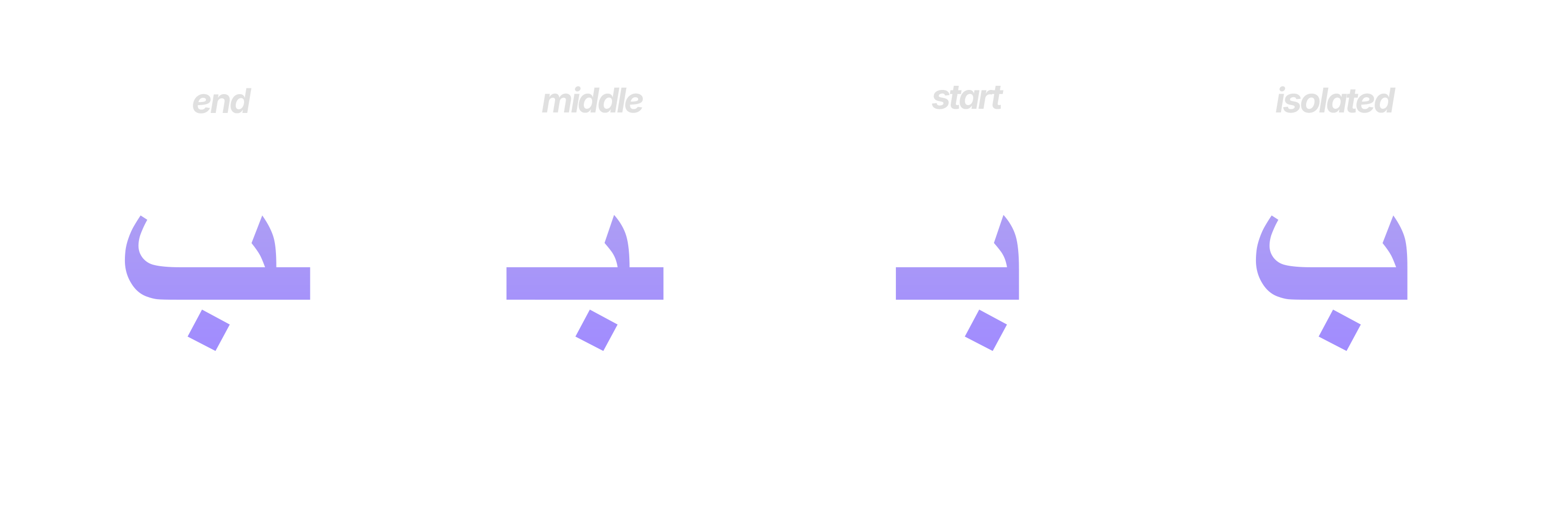
This letter makes the 'b' sound in the English language, like in the word "boat."
As you will see in the coming lessons, there are a few other letters with a similar shape - but different placements of the dot.
So, how will you remember the slightly different variations for these letters?
Imagine the Baa letter as a boat, and the 'B' sound for below. The dot (i'jam), below the boat, is the only arabic letter with that shape that has it below.
So if you are ever confused as to which letter it is - look at the i'jam; B for below.
The next thing you need to learn is harakat. Harakat refers to the diacritics or vowel marks used in the Arabic alphabet to indicate pronunciation, specifically short vowels
For now, we will teach you the most common few.
When the fatḥah (the small diagonal line) is placed above a letter, it makes a short /a/ sound. So the word above would be 'Rana'
Similarly, when a diagonal line is below a letter, its called a kasrah ⟨كَسْرَة⟩ and designates a short /i/ sound.
So the word above would be 'Rina'
This one is called a ḍammah. It makes a short /u/ (as in "duke") sound.
So the word above would be pronounced 'Runa'
This last one is the sukūn. It tells you that the letter has no vowel sound after it. So you pronounce only the consonant, then move directly to the next letter.
So the word above would be prounced as 'Rna'
The letter "Baa" (ب) is the second letter in the Arabic alphabet. Like many Arabic letters, it changes its shape depending on its position in the word. When it appears at the beginning of a word, it connects to the following letter. In the middle, it connects to both the previous and next letters. At the end, it only connects to the previous letter. The isolated form is used when the letter stands alone.